|
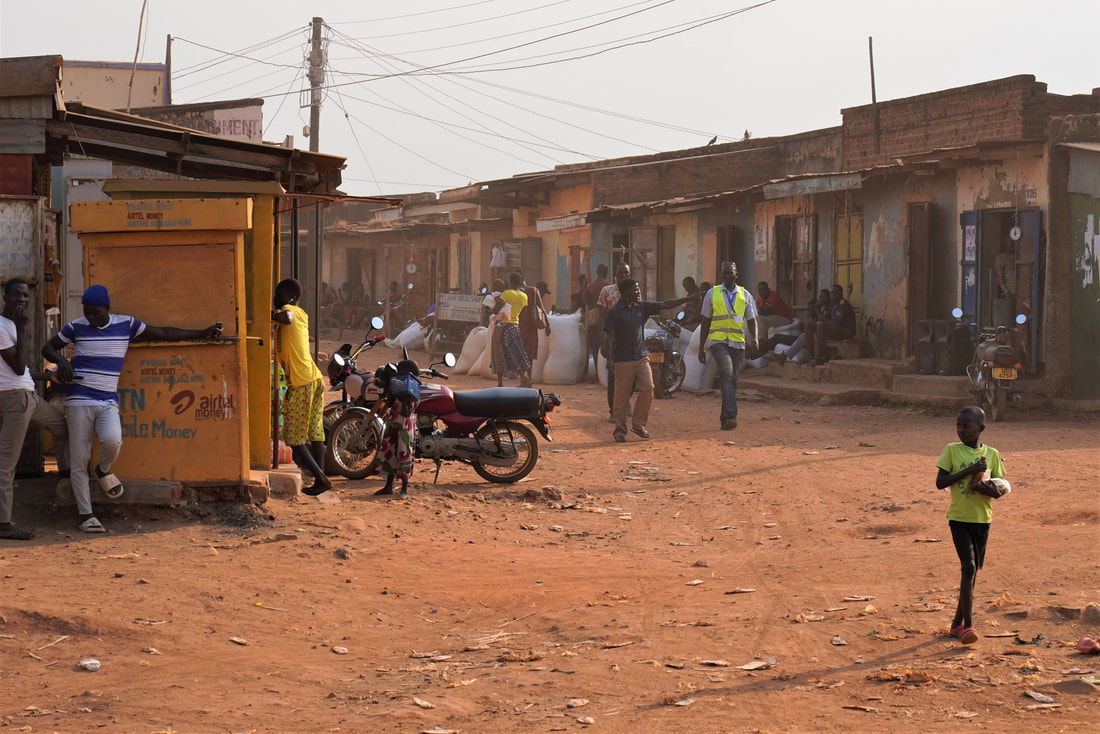
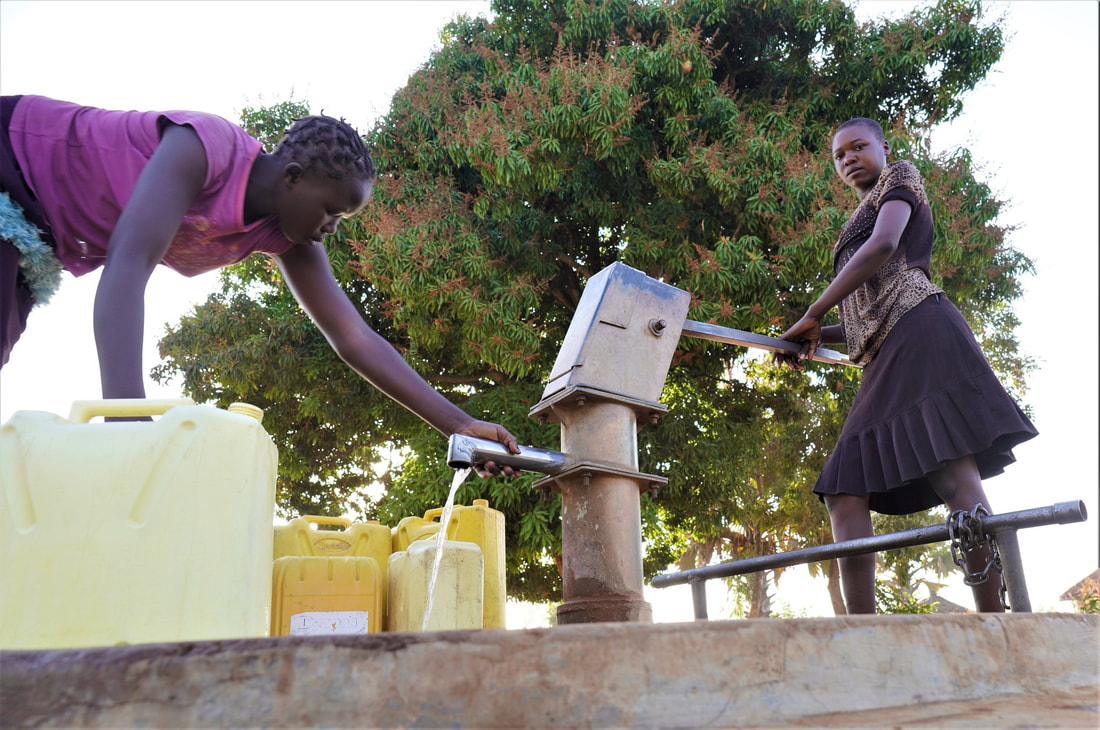
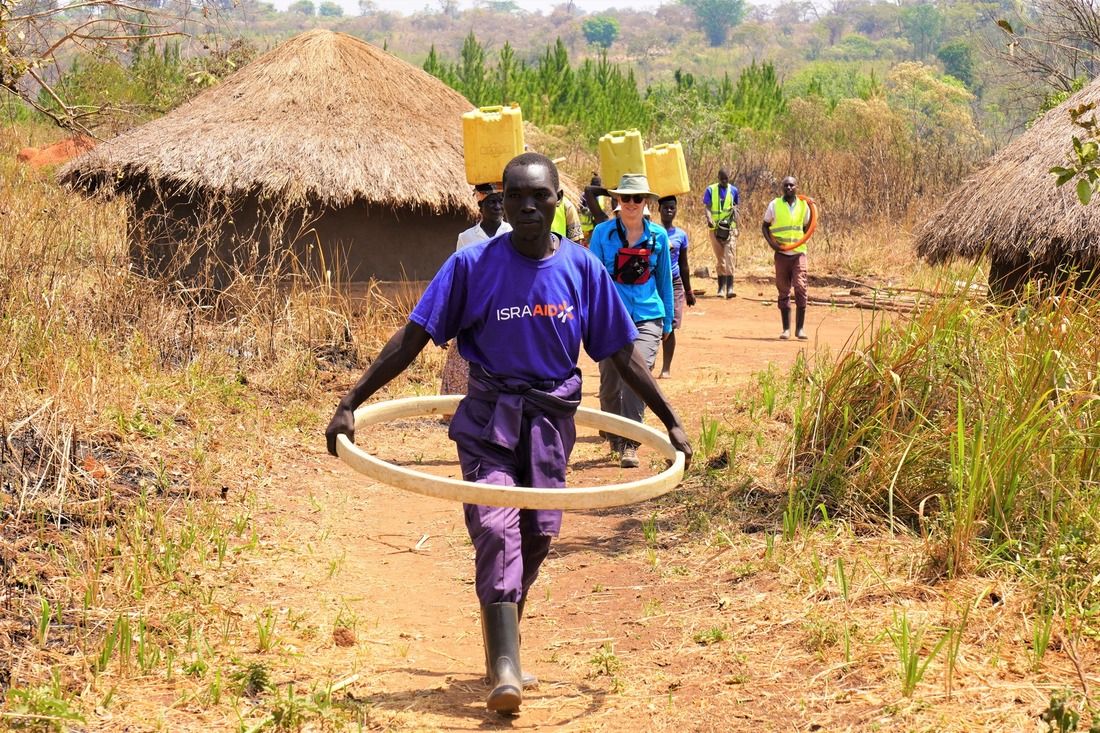
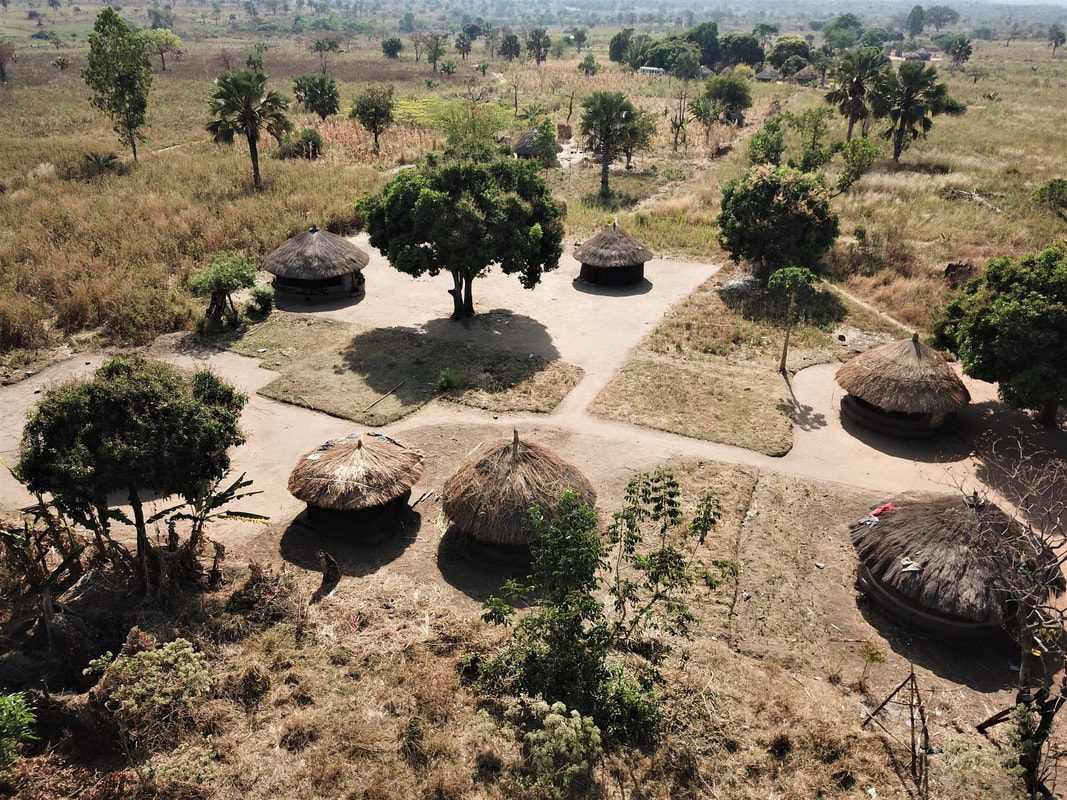
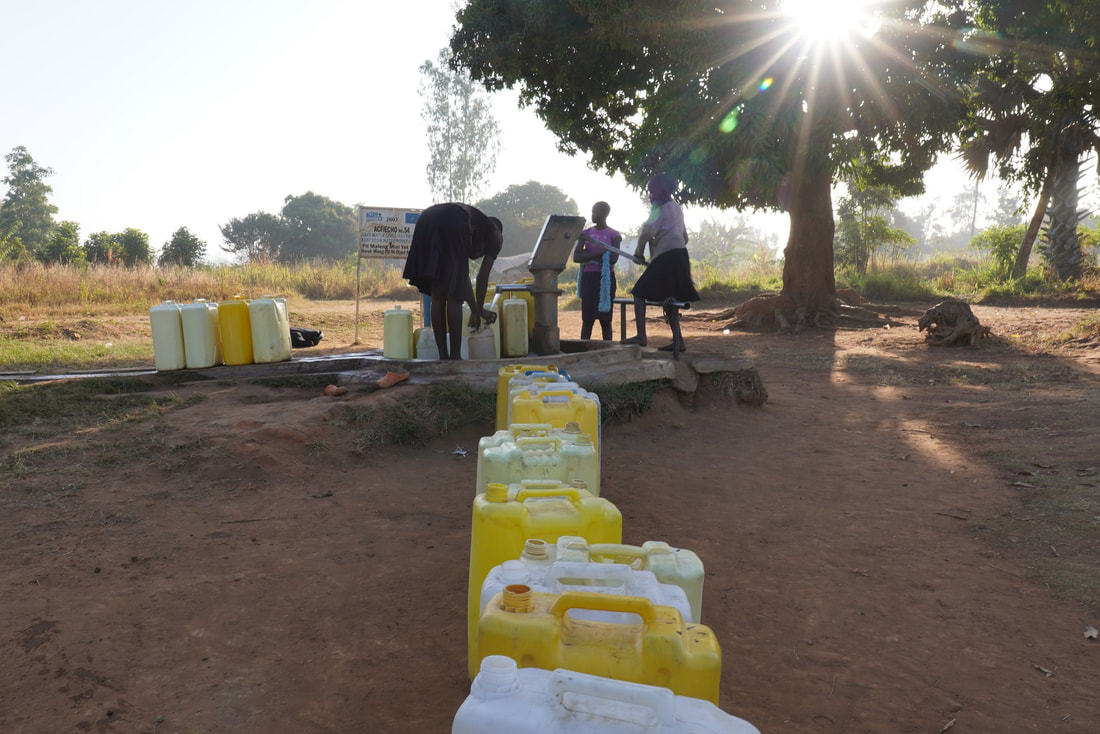
One of our Geoscientists Without Borders Project water exploration sites was deep in Amuru County, not so far on Google Maps, but 2 ½ hours driving each way. The site was chosen between IsraAID and the County Water Authority. Driving is not the best use of our time. On the other hand, if we don’t go to these remote villages, no one else will. And the drive to Angakani was fascinating. We drove through the Amuru trading center (i.e., medium-sized town strung out along a red earth track) which, toward the end of the civil war, became the largest of the 200 “protection” camps in Northern Uganda. There is little remaining evidence of the Amuru camp, but in the 2006 Google Earth imagery one can clearly see the thousands of closely spaced grass huts that comprised the camp. Generally, I avoid asking direct questions about the civil war period, especially to the women and those that may have been of child soldier age during the conflict. But as we passed through Amuru on the tightly packed bus, I turned to Richard who was next to me. I knew he had been to all of the camps as a volunteer distributing food (maize, cooking oil, soy beans, and lentils) for NRC (NRC - Norwegian Refugee Council), ICRC (International Committee of the Red Cross), and WFP (World Food Programme). For some reason, it seemed like the moment to ask a question I had never asked. “Richard, I always hear of two narratives. You were in all the camps. Were they really protection camps or outdoor prisons intended to punish the Acholi people?” He replied in what I have found to be typical, understated Acholi fashion. “Sure, some people did not want to be there, but they were forced to leave their villages.” I did not let up. “Come on Richard, the camps were horrible places with the highest mortality rates on the planet: malaria, cholera, typhoid, HIV, Ebola.” He responded, and perhaps he was only supporting my statement to end the conversation. “Sure, you are right. Everyone hated it. They all wanted to return to their villages. There was not enough food or water. Very crowded. People had no money. The soldiers guarding the camps had money, and brought with them HIV and Ebola.” As the war wound down, survivors of the camps were disbursed into smaller satellite camps closer to their home villages, allowing them to begin to rebuild their homes and gardens, even if they were not all capable of establishing safe water supplies which we are doing in this project. As far as I have seen, the satellite camps were often in horrible locations like swamps or areas devoid of springs, as they were temporary and previously uninhabited. On the return drive, and only from curiosity, and to the annoyance of our entire team as the driving was already too much, I asked to stop in the Amuru townsite to collect a few drone images of the relic camp area. "Just 10 minutes!" Big mistake. Even before I had pulled out the drone, an aggressive crowed immediately gathered around me. Moments later, in this distant, dusty backwater townsite, a heavily militarized-10-pickup-truck-Presidential convoy drove by only a few meters away, further raising the tension. President Museveni was the leader during the LRA civil war and established the IDP camps. I just wanted to get back on the bus and disappear. Serina, Proscovia, and Richard came to my rescue in Acholi. “Hey, he has come here to bring water to villages in Amuru County!" The crowd screamed back, "these Muzungu say they send money, but the money always stays in Kampala and they never come.” Richard shot back, “open your eyes! He is here in front of you! We are coming from Agikanyi. We will be back to drill a well in 2 weeks!” The tension subsided a bit. But retreating to the bus did not feel like an option. I quickly launched the drone. I handed the I-Pad with the real-time 120 m altitude viewing over to the village leader to divert the attention away from me. The drone landed, and the Amuru crowd wished us a safe journey – "Wad Mabeh!"
0 Comments
Leave a Reply. |
Categories
All
Archives
August 2022
|




 RSS Feed